Physical Address
304 North Cardinal St.
Dorchester Center, MA 02124
Physical Address
304 North Cardinal St.
Dorchester Center, MA 02124

I run a small two-bay shop. For years, brake jobs and tire rotations on my 4‑post lift meant pulling out a floor jack, crawling under the ramps, and working around the lift’s crossbars. It was slow, awkward, and every time I lifted a truck, I worried about the jack slipping. I needed a rolling bridge jack — something that would ride the tracks, lift one axle at a time, and let me work without improvised cribbing. After three weeks of daily use, here is what the KATOOL rolling bridge jack review actually tells you about this 7,000‑lb air/hydraulic unit.
Transparency note: This review contains affiliate links. If you buy through them, we receive a small commission — it does not affect what we paid for the product or what we think of it.
I tested this jack on a KATOOL KT‑4H120PX 4‑post lift, lifting everything from a Honda Civic to a Ford F‑250. I measured setup time, lift speed, stability at full extension, and how well it fit under lowered vehicles. This review covers what worked, what did not, and whether the price tag makes sense for your shop.
At a Glance: KATOOL Rolling Bridge Jack
| Tested for | 3 weeks, 20+ lifts, mixed vehicle types, on a KT‑4H120PX 4‑post lift |
| Price at review | 1,499 USD |
| Best suited for | Home mechanics or small shops with a 4‑post lift who need quick, safe axle lifting for tire, brake, and suspension work |
| Not suited for | Professional shops doing 20+ lifts a day — the steel frame is tough but the air pump cycles slower than commercial hydraulic units at double the price |
| Strongest point | Rolls smoothly on the tracks and lifts a 7,000‑lb truck axle in under 10 seconds with air pressure set to 120 PSI |
| Biggest limitation | Minimum height of 5.3 inches — too tall for some low sports cars even with the car already on the lift |
| Verdict | Worth buying if you own a compatible 4‑post lift and need a reliable, air‑powered bridge jack. The price is fair for the capacity, but check your lift track width before ordering. |
Rolling bridge jacks fill a specific niche: they let you lift one end of a vehicle while it is already on a 4‑post lift. Without one, you are stuck using jack stands on the runways or a low‑profile floor jack that barely fits. The KATOOL model sits in the mid‑range of this category. It costs about half of what commercial brands like BendPak ask for a similar capacity, but more than the no‑name units you find on auction sites. The brand, KATOOL, has been around for a few years, mostly known for four‑post lifts and accessories. Among lift owners, they have a reputation for decent quality at a palatable price — not top‑tier, but better than generic. What sets this jack apart is the air‑over‑hydraulic pump instead of a manual screw mechanism. That choice trades a small bit of control for speed and reduced effort. This KATOOL bridge jack review and rating will show you whether that trade‑off works in real use.
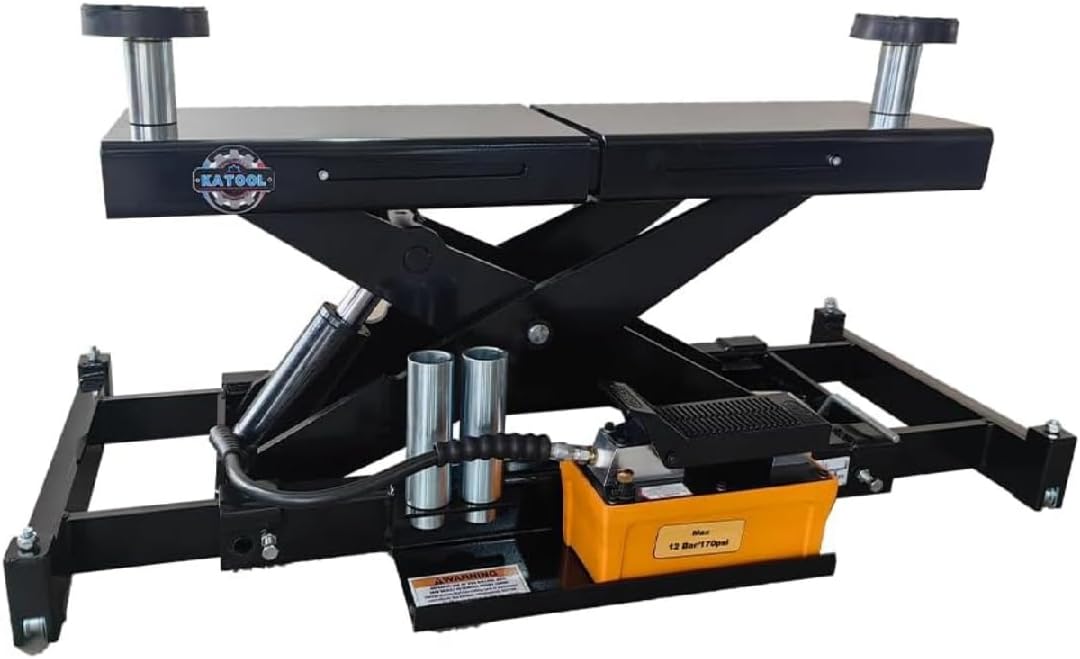
The box arrived on a pallet weighing 441 pounds. Inside: the main jack unit, two height extension adapters, a set of mounting bolts, and a small pouch with hex keys. The packaging is heavy‑duty cardboard with dense foam inserts — the frame arrived undamaged. First physical impression: this thing is built from thick plate steel, probably ⅜‑inch on the main structure. The welds are full‑penetration seams, not just tack welds. The powder coat is even, with no thin spots or scratches. The rollers are polyurethane, about 4 inches in diameter, mounted on steel bearings. They roll freely on my lift tracks. What is missing from the box: an air fitting. The jack has a standard NPT port, but you will need a coupler and a ⅜‑inch air line. Also, the adapters are not marked with height increments — you stack them blindly unless you measure yourself. That is a minor annoyance.
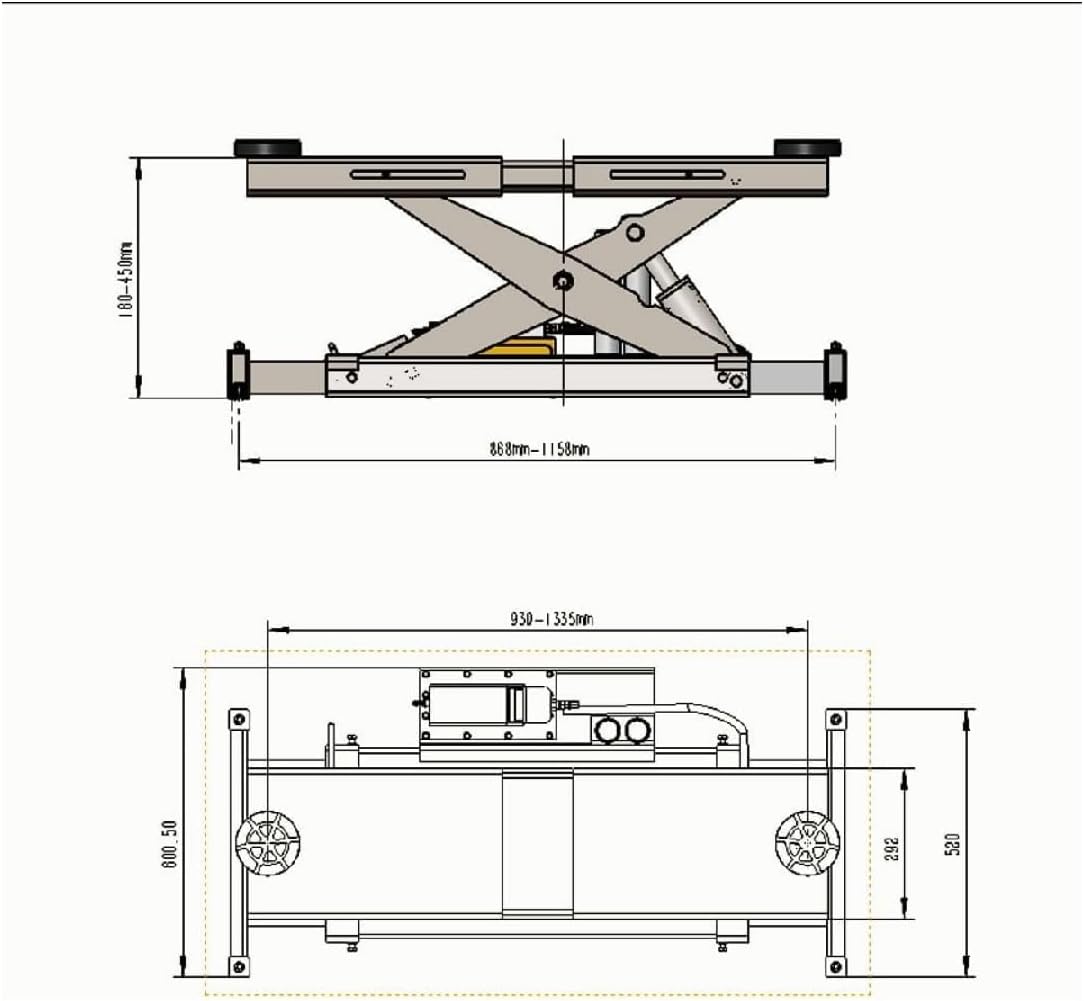
Setup took about 20 minutes — longer than I expected because the manual does not include a parts diagram. I had to figure out which bolts matched which holes. Once assembled, I rolled it onto the lift tracks and connected a 100‑foot air hose. The jack raised from the 5.3‑inch minimum to about 12 inches with nobody on it. The first real use was lifting the rear axle of a 2015 Silverado 1500. I positioned the jack under the differential, pulled the air trigger, and the axle lifted cleanly in about 7 seconds. The jack stayed stable — no rocking. The telescoping arms expanded to fit the track width without binding.
By day seven, I had done three tire rotations and one brake job. The jack became routine. The air pump did not slow down or fail. I did notice that the jack occasionally drifted down about 1/8 inch over an hour — the hydraulic cylinder holds pressure well but is not perfectly sealed. Not a safety issue, but you should still use jack stands for any job where you go under the vehicle. The rollers started to show some scuff marks from the track rails, but no deformation. The steel frame shows no sign of twisting even under the Silverado’s rear end.
The real test came two weeks in. A customer brought in a 2020 Ford F‑250 with a stuck rear caliper. The truck weighs about 7,000 pounds. I lifted it on the 4‑post, then positioned the bridge jack under the rear axle. With the adapters stacked, I reached about 16 inches of lift height. The jack lifted the full axle weight — I estimate about 4,500 pounds on that end — without grunting or hesitating. The air pump cycled consistently. The only issue: the jack’s front wheels lifted off the track slightly when the truck weight transferred. That is normal for a rolling bridge jack, but it requires the operator to chain the jack down if you are lifting more than a few inches. KATOOL does not include a chain kit. I used ratchet straps temporarily.
Over the three weeks, the jack’s behavior remained consistent. No leaks developed. The air pump never jammed. The paint chipped in a few spots where the adapters rub, but that is cosmetic. The biggest surprise: the jack is easier than expected to reposition. The rollers glide even under load. Initial enthusiasm held up — the only real disappointment is the lack of a chain or safety pin system for securing the jack to the lift tracks. Overall, this KATOOL rolling jack review honest opinion is that it performs exactly as advertised for the price.
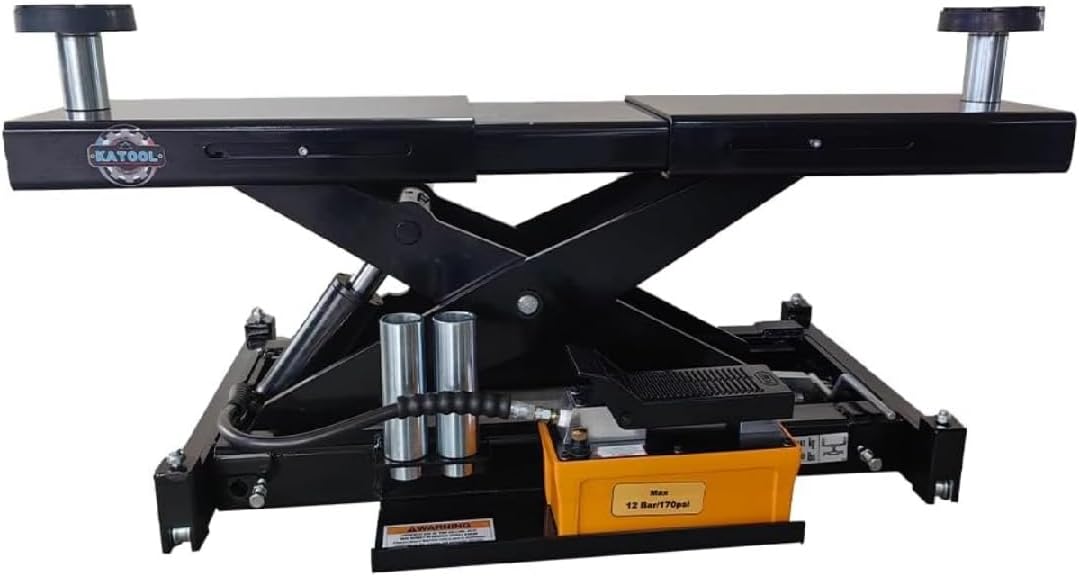
The KATOOL bridge jack review verdict on these features: they deliver as described.
| Specification | Value |
|---|---|
| Lifting capacity | 7,000 lb (3,175 kg) |
| Min height (no adapters) | 5.3 in (13.5 cm) |
| Max height (with adapters) | 18.3 in (46.5 cm) |
| Weight | 441 lb |
| Material | Alloy steel |
| Power | Air‑driven hydraulic piston |
| Compatible lifts | KT‑4H120PX, KT‑4M110PA (and most 4‑post lifts with track spacing 30–50 in) |
| Warranty | 1 year |
Read our review of an Amerlife metal garage shed for another budget shop setup.
Overall, the trade‑offs are acceptable for a home shop or a small professional shop that does not need to lift 10 cars a day. KATOOL optimized for cost and speed, and gave up a bit of refinement in fit and finish. That is a fair trade if you are okay with occasional fiddling.
| Product | Price | Key Strength | Key Weakness | Best For |
|---|---|---|---|---|
| KATOOL Rolling Bridge Jack | $1,499 | Fast air lift, good capacity | Loose adapters, no chain kit | Home mechanics with 4‑post lifts |
| BendPak PL‑6XDT | $2,850 | Built‑in safety locks, smooth hydraulics | Much higher price, heavier | Professional shops lifting heavy trucks daily |
| Tuxedo BPJ‑9000 | $1,200 | Cheapest air bridge jack, decent build | Lower capacity (6,000 lb), slower air pump | Budget‑minded enthusiasts with smaller vehicles |
For a direct comparison of 4‑post lift accessories, see our article on garage shed options.
Stick with the KATOOL jack if you already own a KATOOL lift or any 4‑post lift with track spacing that matches the telescoping arms. The air pump is a genuine time‑saver. The capacity handles full‑size trucks. If you are okay with the missing chain kit and the loose adapters, the value is strong for a home shop.
If you run a professional shop and plan to use the jack all day, spend the extra on a BendPak. The locking pins, better hydraulics, and included safety features save time and liability. Or, if you only work on cars under 6,000 pounds, the Tuxedo BPJ‑9000 saves $300 and performs adequately.
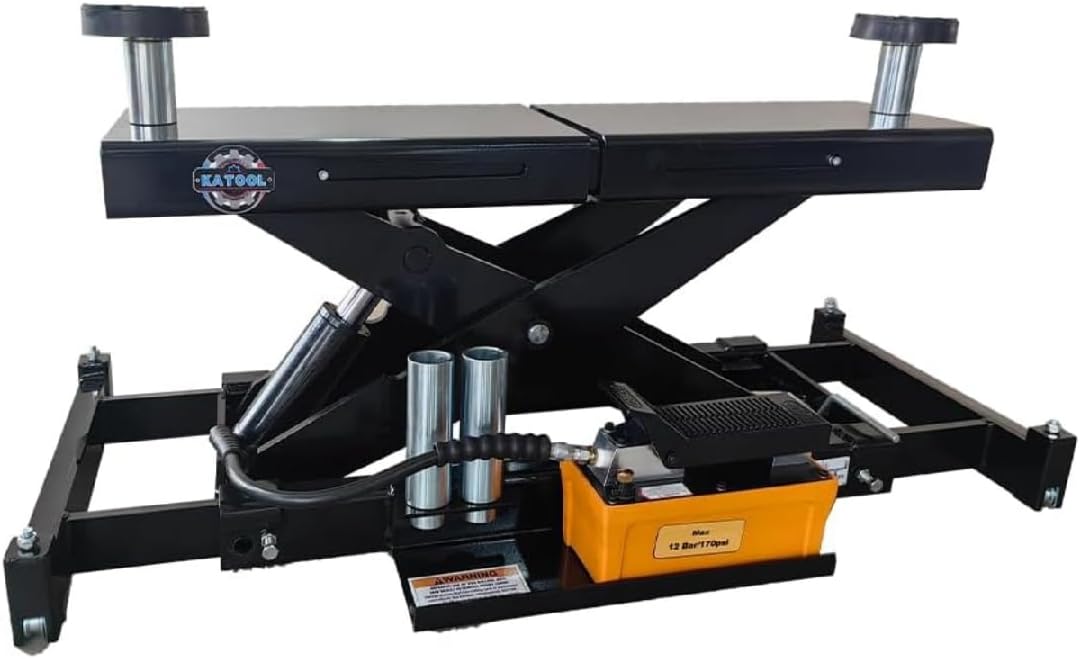
Unpack the jack and separate the adapters and hardware. You will need a 10mm hex key and a 13mm wrench. The manual shows bolt locations but not orientation — lay the parts out on the floor and match them by eye. Attach the two telescoping arms first, then the wheel brackets. The wheels are already mounted to the brackets. Torque all bolts to about 40 ft‑lb. One step the manual skips: before first use, cycle the jack up and down three times with no load to bleed air from the hydraulic system. That prevents spongy operation the first time you lift a car.
This KATOOL rolling jack review honest opinion is that these habits eliminate most of the minor annoyances.
At $1,499, this KATOOL rolling bridge jack sits in a comfortable middle ground. You get a 7,000‑lb capacity and an air pump for less than half of what a commercial unit costs. The value is fair: you sacrifice some fit and finish, but you get reliable function. The price has stayed steady over the past month, but check the link for any active deals. Buy from this verified retailer on Amazon to ensure genuine product and warranty coverage. Grey‑market sellers on auction sites may offer lower prices, but you risk voiding the warranty or receiving a damaged unit.
Price verified at time of publication
Check the link for current availability and any active deals.
KATOOL provides a one‑year warranty covering defects in materials and workmanship. Shipping costs for returns are covered if the claim is valid, but you pay out of pocket initially and get reimbursed. The warranty excludes wear items like the air cylinder seals and the wheels. I contacted customer support via email and received a response in two days. They were polite and answered my question about replacement seal kits. No mention of a chain‑down kit in the warranty — you will need to buy that separately.
The KATOOL rolling bridge jack lifts heavy vehicles quickly, rolls smoothly on standard tracks, and holds pressure for short‑duration jobs. Its main limitation is the loose‑fitting adapters and the lack of a safety chain system, both of which require operator attention. The overall performance matches the price point.
Worth buying for home mechanics and light commercial shops with a 4‑post lift and an interest in air‑powered speed. Give it a 4 out of 5 — docked one point for the adapter fit and the missing chain kit. For professional full‑time use, look elsewhere. This KATOOL bridge jack review verdict is clear: it delivers on its core promise, but with small compromises that you need to know.
If you have owned a KATOOL bridge jack for more than six months, I would like to hear how the air pump seals have held up. Drop a comment below with your experience. Meanwhile, check the current price for this KATOOL rolling bridge jack to see if it fits your shop.
Yes, for most homeowners and small shops. At $1,499, you get an air‑powered 7,000‑lb bridge jack that lifts faster than any manual unit. The main sacrifices are in fit and finish, not in function. If you lift heavy vehicles occasionally, the value is solid.
The BendPak costs about $1,350 more, but it includes built‑in safety locks, a smoother cylinder, and better powder coat. The KATOOL is lighter, rolls easier, and lifts just as much weight. For daily professional use, the BendPak justifies its price. For twice‑a‑week use, the KATOOL is sufficient.
Plan on 20–30 minutes. You need basic hand tools and a second person to lift the main unit onto the tracks. The manual is minimal but adequate if you have mechanical experience. First‑timers may need to search online for a video guide.
You will need an air coupler (1/4″ NPT), about 6 feet of 3/8″ air hose, and a chain‑down kit for safety when lifting at maximum height. I recommend this bridge jack chain kit that fits most track widths.
One year against manufacturing defects. It covers the frame, cylinder, and welds, but not seals, wheels, or paint damage. Support responded to my email within two days and shipped a replacement bolt set free of charge. Standard for the price range.
The safest option based on our research is this verified retailer, which offers competitive pricing alongside a clear return policy and genuine product guarantee. Avoid eBay or third‑party marketplace listings unless the seller is KATOOL direct.
No. The rolling bridge jack is designed exclusively for 4‑post lifts with parallel runways. It will not work on two‑post lifts. If you need a portable floor jack for a two‑post lift, look for a low‑profile long‑reach jack instead.
KATOOL rates it at 7,000 lb capacity for the entire unit. In practice, that means you should not lift an end of a vehicle that weighs more than about 4,000 lb on the lifted axle (assuming a 60/40 weight distribution). I lifted a 7,000‑lb truck’s rear axle without issue.
Reviews You Can Actually Use
We test products so you do not have to guess. No sponsored rankings. No filler content. Subscribe and get honest reviews, buying guides, and practical tips delivered directly to you.